How to Write a Philosophy Paper
A 25-RULE GUIDE FOR UNDERGRADUATE STUDENTS
A philosophy paper is, in part, a piece of argumentative writing that defends a thesis about a philosophical question. Writing a philosophy paper will likely be different from writing papers for most other courses. This guide is meant to help you understand some of the strategies and guidelines that students often need learn when they begin writing philosophy papers. I will call these the “rules,” and there are twenty-five. Since I have a background in film, I will sometimes use scenes from film and television to make these rules more concrete.


There are, of course, many excellent philosophy papers that break these rules. However, good philosophy papers do not break them casually. As with anything else, it’s best to learn the rules before breaking them well, rather than breaking them without understanding them.
Philosophy papers are often evaluated according to four major standards: (1) writing quality, (2) argument reconstruction, (3) critical engagement, and (4) charity. Throughout this guide, I explain the rules that fall under each of these standards.
Use the hyperlinks under Contents below to navigate quickly to a section.
1. Writing Quality
An excellent philosophy paper is written in an appropriate academic style. Its structure is clear, and every sentence contributes to the paper’s overall argument. Its terms and ideas are well defined and carefully explained, and they are illustrated with clear examples.
What does this look like? Often, it begins with an introduction.
1.1 Introduction
RULE #1: STATE YOUR THESIS EXPLICITLY, USUALLY IN ONE OR TWO SENTENCES
RULE #2: FOLLOW YOUR THESIS WITH A ROADMAP OF THE PAPER’S ARGUMENT
— ah, roadmaps, one of those seemingly tedious features that appear again and again in philosophy papers.
For many undergraduate philosophy papers, that’s nearly all the introduction needs to do. Of course, in published philosophy papers, the introduction is often much longer. In an undergraduate paper, however, you usually need only the bare bones. This is often better, since you do not want to write sentences just for the sake of it. You want every sentence in your paper to contribute meaningfully to its overall argument.
Let’s look at what I mean by a thesis and a roadmap, using Berstler’s “What’s the Good of Language? On the Moral Distinction between Lying and Misleading” as an example. In the passage below, the thesis is highlighted in yellow and the roadmap in green:
I give a new argument for the moral difference between lying and misleading. In Section I, I clarify my terminology. My overall strategy is to anchor lying to assertion and Judith-style misleading to a certain kind of implicature. In Section II, I argue that as I have defined the terms, we do indeed intuit that lying is worse than misleading. In Section III, I raise problems for the prevailing analyses of the lying and misleading distinction. In Section IV, I detail my own, fairness-based account. In Section V, I argue against objections to my positive account. Finally, in Section VI, I sketch some of the more interesting upshots of my analysis.
There is no doubt about what Berstler’s thesis is. She is giving a new argument for the moral difference between lying and misleading. Your thesis should aim to be just as clear. Notice also:
Her thesis is not merely the topic of her paper. She is not saying, “This paper is about lying and misleading.” She is giving an argument for the difference between them. This makes her thesis contestable: someone could argue against it.
Her thesis is also specific. She is not just talking about lying in general; she is specifically giving a new argument about the moral difference between lying and misleading.
In her paper, Berstler’s thesis also explains what the argument will be. Your papers should do the same. Your thesis should not merely say that you will give an argument; it should also indicate what that argument will be. For instance: “The argument I defend is …”
Berstler’s thesis also gives her paper argumentative direction. This brings us to the roadmap, which usually comes after the thesis. The thesis says what you will defend; the roadmap says how you will do it. Berstler uses “Section I,” “Section II,” “Section III,” and so on to tell the reader exactly how the paper will proceed. Roadmaps are important because they can help the reader see the structure of the paper before diving in. They can also serve as a reference that the reader can return to if they need a reminder of where the argument is going.
1.2 Body of the Paper
After your introduction, there are several important things to keep in mind as you guide your reader through the body of the paper. These include: signposting, accessibility, relevance, structure, and style.
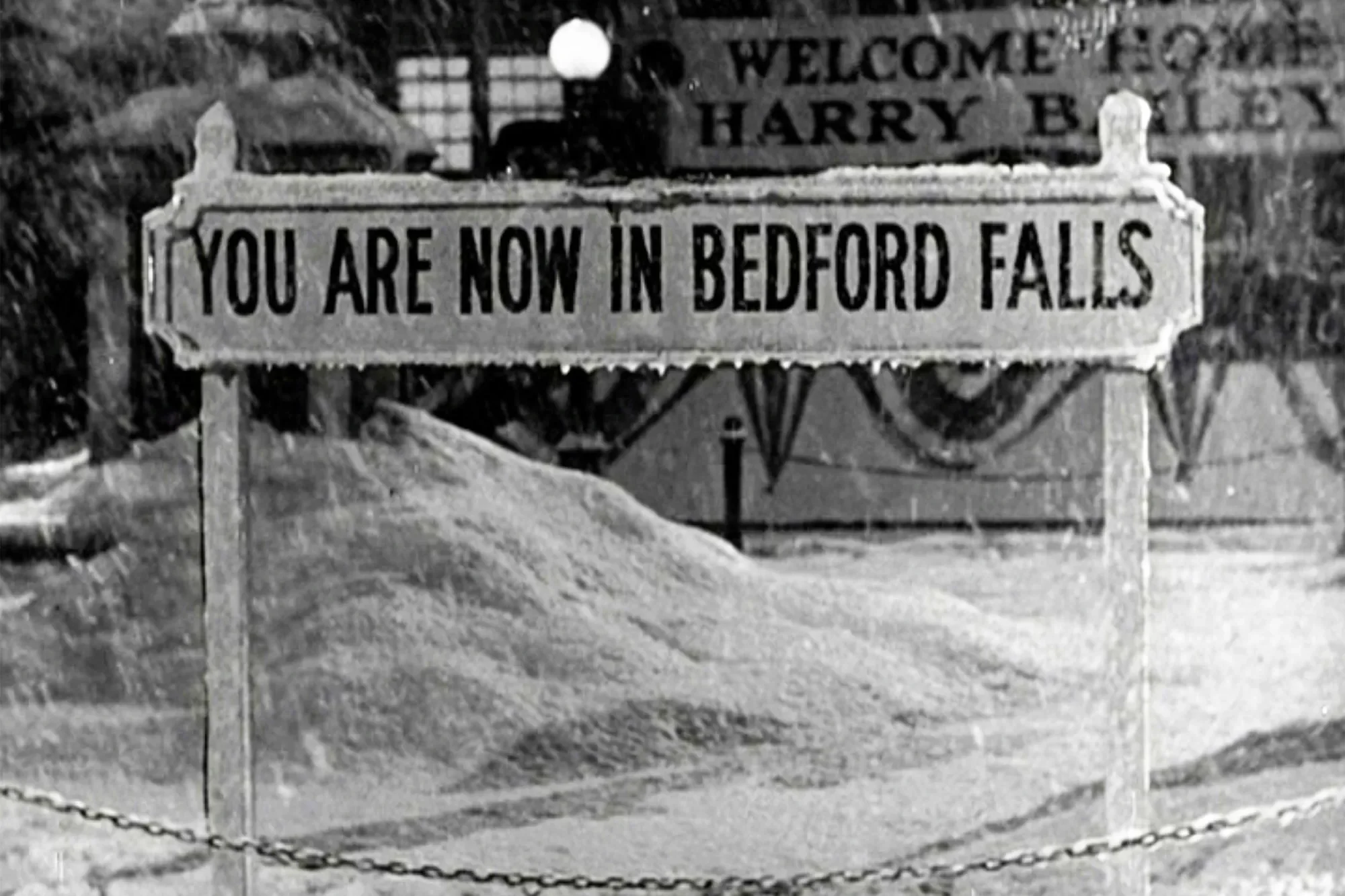
Signposting keeps readers from wandering around Bedford Falls by telling them where they are in the argument (It’s a Wonderful Life, 1946).
RULE #3: Signpost throughout your paper
Signposting is the use of explicit verbal cues that help the reader follow the structure of a paper. Just as signs on a road help travelers know where they are and where they are heading, signposting does the same for the reader. It indicates what stage of the discussion the reader is in and where the argument is heading. This helps prevent the reader from getting lost, circling back, or losing sight of the point.
Examples of signposting phrases include:
“I will argue that …”
“In the next section, I …”
“One objection is …”
“By contrast, …”
“To return to the main point, …”
“It follows that …”
Note that in philosophy papers, unlike in many other kinds of papers you may have written, it is appropriate to use the first-person pronoun “I” to guide the reader through the paper, explain your reasoning, and take ownership of your argument.
Connectives also help guide the reader. Especially useful ones include because, therefore, consequently, however, nevertheless, but, for example, specifically, furthermore, and finally.
Click on the images below to see examples of signposting from published philosophy papers. These examples can serve as models for your own writing.
Example I. “Full Belief and Loose Speech” by Sarah Moss

Accessibility means not making readers feel as though they have to decode “supercalifragilisticexpialidocious” (Mary Poppins, 1964).
RULE #4: Make your paper accessible
Accessibility is the practice of expressing complex philosophical ideas in a way that is easy for readers to understand without making those ideas inaccurate or less interesting than they are.
One way to achieve accessibility is to imagine a smart reader encountering the material for the first time. How would you explain the ideas to that reader? Or think of a time when you encountered a philosopher who clearly had something interesting to say but did not explain it clearly. We have all been there. How might you explain those ideas better than that philosopher did? For example, you might:
Avoid unexplained jargon. Accessible papers do not make readers feel as though they need to figure out what supervenience means before they can understand the point.
Define key terms. An inaccessible sentence might only say, “Aristotle claims that eudaimonia is the highest good.” A more accessible sentence would not just say this but would also define the key term: “The Greek word eudaimonia is often translated as happiness or flourishing.”
Explain quotes clearly and show their relevance. A quote should never be dropped into a paper without explanation. Quotes are often difficult to understand on their own. If you choose to quote a philosopher, explain what it means and why it matters for the point you are making.
Give examples that illustrate abstract ideas. To illustrate enumerative induction, for example, which is reasoning from repeated examples to a generalized conclusion, you might explain that because the sun has risen every day so far, we infer that it will rise tomorrow.

Relevance means no unnecessary extras: no chili powder in Jesse’s formula, and no stray sentences in the paper (Breaking Bad, 2008).
RULE #5: Make Every part of the paper relevant
Relevance means that every part of the paper should contribute directly to the overall argument, just as each piece of a puzzle contributes to the finished whole. A sentence is usually relevant if it helps state, explain, support, clarify, or defend your thesis.
Being relevant also means leaving out what does not belong. A sentence is irrelevant if it wanders from the main point, adds background that does no argumentative work, or says something interesting but unnecessary. Suppose you are arguing that Kant’s categorical imperative fails to account for the intuition that lying to a murderer at the door is morally permissible. A paragraph explaining Kant’s categorical imperative is relevant. Sentences saying, “this topic has been discussed by many philosophers” or “Kant is German” usually are not.
Ask yourself: if you removed a sentence, would the argument lose something important? If not, the sentence may not be relevant.

Structure means building the paper in the right order: like building a house, each part needs to supports the whole (The Notebook, 2004).
RULE #6: Structure your paper well
Think of how much easier it is when instructions for assembling a new piece of furniture are structured in a way that makes sense. Now think of how frustrating it feels when the instructions are not. A well-structured paper has paragraph breaks that are intentional and well placed, marking new steps in the argument. Its sections are also ordered in a way that builds the essay logically.
For instance, it is often best for the paper to begin by stating the thesis, then reconstructing the relevant argument, then analyzing it, and only afterward turning to objections and replies.
Better order: thesis → argument reconstruction → objection → reply
Worse order: objection → background → thesis → unrelated example
You may want to include headings in your paper to make this structure especially clear, and if you do, they should be informative.
Better heading: “Argument for Compatibilism”
Worse heading: “Main Part”
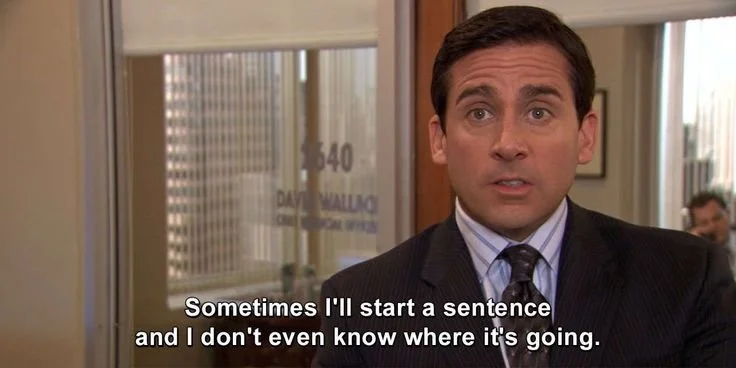
Academic writing style means knowing where your sentence is going: keep the prose clear, controlled, and precise (The Office, 2005).
RULE #7: Use Good academic Prose
Good writing style matters in philosophy because it helps the reader focus on the argument itself rather than on the writing.
With respect to style, your writing should be concise, clear, and in plain English. For example, instead of writing, “It is a matter of considerable philosophical importance that we take into account the possibility that the argument may perhaps be mistaken,” it is better to write, “We should consider the possibility that the argument is mistaken.” The second says the same thing more clearly and concisely.
Your writing should also be controlled and precise rather than emotional or rhetorical. For instance:
Instead of: “Clearly, this view is ridiculous.”
Write: “This view is unconvincing for two reasons.”
In a philosophy paper, consistency in vocabulary also matters. If you use the word person to mean one thing, do not switch to personhood simply for the sake of variety. These are different terms, and in philosophy such differences are often significant. The same is true when reading philosophical texts: consistency in terminology matters. If a term is especially important, it may also help to italicize or bold it so that the reader can see that it plays a central role in the paper.
Finally, your writing should be free of errors in grammar, punctuation, and spelling.
1.3 Conclusion
Alas, all excellent papers must end. So, finally, we arrive at the conclusion.
There are many ways to write a conclusion, but to remain consistent with the rules discussed above, here are a few widely accepted ways to bring your paper to a close.

The conclusion should pull the argument back into view, like Dumbledore drawing out a memory (Harry Potter and the Goblet of Fire, 2005).
RULE #8: A good conclusion can Restate what the paper has shown
Remind the reader of your thesis and the argument for it. This becomes especially useful as your paper gets longer. By the end, a summary of what you have done can be refreshing to the reader and can bring the paper to a satisfying close. To see what I mean, consider the conclusion from Helton’s paper, “If You Can’t Change What You Believe, You Don’t Believe It”:
I have defended the view that subjects necessarily have a certain robust psychological capacity to revise their beliefs in response to counter-evidence. The argument for this view draws both on a certain norm of rationality and on a variant of ‘ought’ implies ‘can.’ The resulting view permits a wide range of mental states into the class of belief, including at least some irrational states and at least some states that are never contravened by evidence. At the same time, the view has the surprising consequence that idées fixes are not beliefs. While this result is initially counterintuitive, I have argued that, on balance, we should welcome it.
In the paragraph above, Helton reminds the reader of the thesis her paper has defended, summarizes the argument for that thesis, and explains why the result matters.
One useful strategy is to turn the roadmap from your introduction into a conclusion by rewriting it in the past tense. However, if you do this, it is often better to vary the phrasing so that the conclusion does not sound like your introduction repeated word for word.

A backward-looking conclusion uses the rearview mirror well: it looks back at the argument while showing what remains unresolved (Chinatown, 1974).
RULE #9: A good conclusion can show what is still at stake
In addition to restating what your paper has shown, a backward-looking conclusion can return to the argument you have just made. One way it can do this is by noting what further argument would be needed to settle the debate. Another way is by briefly noting what replies might still be available to your opponent. For example, in her paper “Belief, Credence, and Norms,” Buchak does this in the following way:
However, there still remain some avenues for the eliminativist about belief. First, she could adopt the Certainty View, either about the relationship between belief and credence or about the relationship between belief-knowledge and credence, and argue that the blame norm can be cashed out in terms of credence 1 in the individual’s guilt. Alternatively, she could argue that …
A backward-looking conclusion can also be a way of indicating the limits of your paper. In philosophy, this is often a virtue rather than a flaw, since a single paper rarely settles an issue completely. In his paper “Hedged testimony,” van Elswyk does this in the following way:
The focus of this essay was also incomplete by only considering the warrant and responsibility components of testimony. … A complete accounting of how hedging makes a difference to the normativity surrounding testimony will need to detail how hedging influences or alters the strength of this pressure. Despite the limits in scope, this essay clarifies the nature of testimony generally by …
Similar to van Elswyk, you might say, for example, that you have shown only one part of a larger claim and that more work would be needed to establish the rest.

A forward-looking conclusion points to what comes next: it sends the reader toward the next adventure (The Hobbit: An Unexpected Journey, 2012).
RULE #10: A good conclusion can indicate what comes next
Whereas a backward-looking conclusion returns to what your paper has already shown, a forward-looking conclusion looks beyond the immediate argument and asks what comes next. In addition to restating what your paper has shown, this kind of conclusion can briefly point to a further question, a problem that has opened up, or an issue that should be examined next. For example, in their paper “The Birth of Belief,” Moss and Shwab write the following as part of their conclusion:
This opens important new areas of epistemological investigation. First, it enables a focus on the presuppositions and consequences of belief, developing a theory of what sets belief apart from … Second, it makes natural a shift from focusing on the different kinds of things about which we can have beliefs to the notion of belief itself, and thereby to a focus on the preoccupations of modern epistemology.
In this forward-looking conclusion, Moss and Shwab point to a couple of issues that can be examined next in light of what the paper has argued.
2. Argument Reconstruction
Now that we have covered the rules for writing quality, we can turn to the other standards by which philosophy papers are often evaluated.
The most natural standard to focus on next is argument reconstruction, since that is often the section that immediately follows the introduction to your paper.

In undergraduate philosophy courses, you are typically assigned texts by different philosophers – either contemporary or historical – to read and think critically about. In writing your papers, you are then usually asked to reconstruct the argument of one of the figures on whom the course focuses.
This is not a mere summary of the text. A summary reports what a text says, often in the order in which the author says it. An argument reconstruction explains the reasoning by which the philosopher tries to establish a conclusion by examining how certain premises, considerations, examples, or distinctions support that claim.
So how should you approach this?

Careful reading means studying the maze more than once: reread until the structure of the text comes into view (The Shining, 1980).
RULE #11: Read the text carefully, more than once
Begin by reading the text carefully, then rereading it. Try to get a sense of the text’s structure.
Some authors will tell you the structure of their text explicitly. Others will not. In those cases, you must pay close attention to how the parts of the text fit together.
RULE #12: Create an outline
Make an outline of the text’s major argumentative moves, and draw arrows to show how they fit together. One way to do this is to begin with the main conclusion. Then draw arrows from the supporting premises to the conclusion, and from the reasons for each premise to that premise.

Identifying the main conclusion means finding the exit: restate where the argument is ultimately trying to go (The Truman Show, 1998).
RULE #13: Identify and restate the main conclusion in your own words
Identify the main conclusion for which the text is arguing. This is often, though not always, found in the opening and closing paragraphs. Then restate that conclusion in your own words. This gives you a concrete test for comprehension: if you cannot restate the main conclusion in your own words, you probably do not yet understand the paper well enough to reconstruct it.
When doing this, it is important not to confuse auxiliary arguments, which support important premises, with the premises or the main conclusion itself.

Identifying explicit premises means writing the argument out where you can see it: make each step visible (The Social Network, 2010).
RULE #14: Identify and write out the premises, if they are explicitly given
Sometimes the philosopher will support the main conclusion with premises. When reconstructing a philosopher’s argument, it is often easiest, especially when you are first learning philosophy, to begin by stating the premises explicitly. For instance, if you are writing on Gideon Rosen’s argument against physicalism, given in The Norton Introduction to Philosophy, 2nd ed., you might begin your reconstruction by laying out the premises of the argument like this:
P1: There are numbers. P2: Numbers are not physical objects. C: Therefore, physicalism is false.
If you have taken a logic course, you may also try to reconstruct implicit premises yourself.

Thought experiments, for instance, ask us to enter a scenario and see what follows, rather than simply listing premises (The Matrix, 1999).
RULE #15: If premises are not explicit, identify supporting considerations
Sometimes the premises are not given explicitly, or the arguments you read do not lend themselves to this kind of straightforward deductive reconstruction. Philosophers also support their conclusions in other ways: through thought experiments, empirical findings, analogies, appeals to intuition, or by showing that a view solves a puzzle, to name just a few.
In these cases, reconstruct the argument carefully and accurately by identifying the supporting considerations in the form in which they are presented in the text.

Identifying reasons turns “Why so serious?” into the more useful question: why does the philosopher accept the premises they do? (The Dark Knight, 2008).
RULE #16: Identify the reasons for the premises or considerations
When reconstructing a philosopher’s argument, identify why the philosopher accepts the premises or supporting considerations that they do. Then show how those premises or considerations lead to the conclusion.
In other words, it is not enough to only say Socrates claims that X. You must go further and explain why Socrates claims that X. In other words, Socrates argues for X because …
3. Critical Engagement
Once you have reconstructed the argument clearly and accurately, you are in a position to analyze it and engage with it critically. Whereas argument reconstruction asks, “What is the argument?”, argument analysis asks, “Does the argument work?” Critical engagement then develops your own contribution in light of that evaluation.

Analyzing the argument means doing detective work: look for strengths, weaknesses, hidden assumptions, and clues that matter (Knives Out, 2019).
RULE #17: Analyze the argument
Argument analysis is the evaluation of a reconstructed argument’s strengths and weaknesses. This is the diagnostic stage. At this point, you are investigating where the argument succeeds and where it fails. You can do this by asking questions like these:
Are the premises true or plausible?
Does the conclusion follow from the premises?
Does it beg the question, that is, assume what it is supposed to prove?
Are there any hidden assumptions?
Are there any strong objections or counterexamples?
Is there an important distinction that holds up?
Does the thought experiment really support the claim it is meant to support?
How does this view compare with rival views?
What follows if the argument succeeds?
Look especially for definitions, distinctions, unargued assumptions, and ambiguities, since these are often places where you may be able to push back.

Critical engagement means entering the duel: decide where the argument should be challenged or defended (The Empire Strikes Back, 1980).
RULE #18: Critically engage with the argument
Once you have analyzed the argument, you are ready to engage with it critically. Whereas analysis is the diagnostic stage, critical engagement is the contribution stage. On the basis of your analysis, you should decide how you want to respond to the argument. If your analysis revealed a serious weakness in the argument, for instance, you might focus on that weakness. If your analysis showed that the argument is stronger than it first appears, you might defend it against an objection. There are many ways to engage critically with a text. Here are some ways you might do so:
raise an objection
defend the argument or thesis against a strong objection
offer a stronger argument for the thesis or make the thesis more plausible
discuss what follows if the argument or thesis succeeds
compare the argument with a rival view and explain which handles the issue better
argue that a philosopher is committed to the thesis by virtue of their other views, even if they do not explicitly endorse it
Not every paper must do all of these. In fact, it is usually better if your paper does not. A good paper typically chooses one, and sometimes two, and does them well and thoroughly.

Objecting to one of the premises is often the most straightforward way to engage critically with a text. If you choose to object, you may want to provisionally grant one premise and focus instead on another that is more important or easier to challenge. For example, consider again Rosen’s argument that physicalism is false:
P1: There are numbers. P2: Numbers are not physical objects. C: Therefore, physicalism is false.
You might grant P2, that numbers are not physical objects, given that they have no mass and lack other features we would expect physical objects to have. You might then challenge P1 by arguing that abstract objects, like numbers, do not exist.
If you raise an objection, ask what the philosopher might say in response. A strong philosophy paper does not usually stop at “here is my objection.” It also asks: what might the philosopher say back, and can I answer that reply? This shows that you have thought seriously about the dialectic rather than simply making a quick point and moving on, and it gives you a chance either to refine your objection or to recognize that it may not succeed as easily as you first thought.
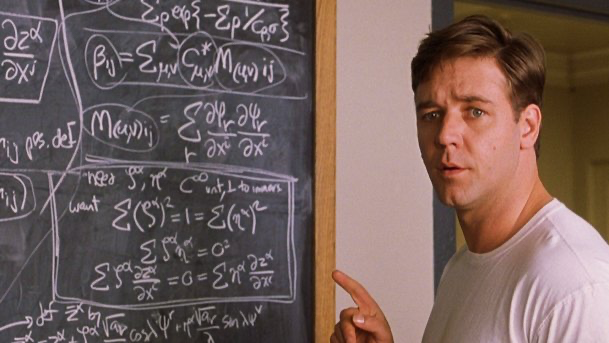
Making a small point means not trying to solve the whole chalkboard: choose one claim you can defend clearly and carefully (A Beautiful Mind, 2001).
RULE #19: Make a small point, rather than an overly ambitious one
Whatever form of critical engagement you choose, your paper should aim to make a small, modest point.
While some ambition is admirable, being overly ambitious often results in a paper that is hard to read and full of inadequately defended or poorly explained claims. If you like your idea, there may be time to develop it into something larger later. For term papers, it is better to make one modest point clearly and carefully than to make a sweeping point that cannot be fully defended.

Originality means having your own lightbulb moment: make a modest point that shows independent thinking and understanding of the material (WALL-E, 2008).
RULE #20: Make an original point
While the point you argue for should be modest, it should also show originality. This does not mean coming up with your own theory, breaking entirely new ground, or making a completely new contribution. Given that philosophy has been around for thousands of years, it is very likely that some philosopher has already made a point similar to yours. Trying to do so, especially at this early stage, also risks coming up with an idea that is overly ambitious rather than modest.
By an original point, I mean one that shows independent thinking rather than simply repeating ideas given to you by your professor, TA, or the philosophers themselves. It is an attempt to develop your own argument, or your own way of elaborating, criticizing, or defending an argument, in a way that shows you understand the material and can think critically about it.
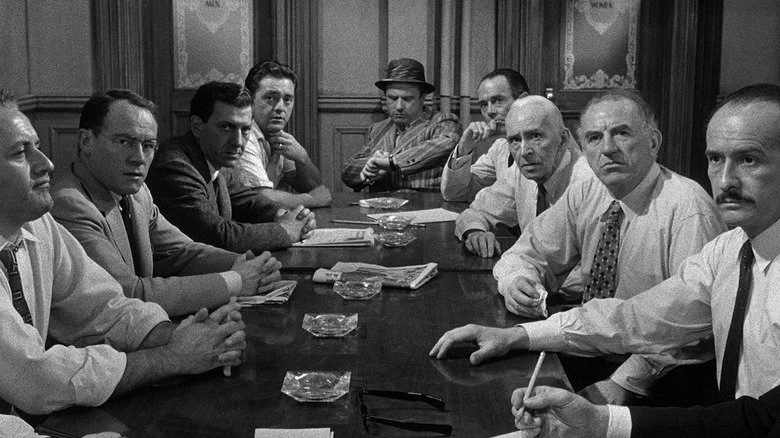
Discussing your point means putting it before the room: let others test, question, and strengthen your argument (12 Angry Men, 1957).
RULE #21: Discuss your point with others
Once you have developed your modest and original critical engagement, you should discuss your view with those around you. This is helpful for several reasons. Others can give you feedback, point out weaknesses, and help you make your argument stronger. In addition, conversation often helps you clarify your own thinking and see possibilities or problems you might otherwise have missed.
Most importantly, one of the best ways to check how well you understand the material is to try to explain it to someone who is not already familiar with it. If that person cannot understand the argument you have reconstructed or the point you are trying to make, this may mean either that you need to develop a better grasp of the material or that you need to find a clearer way to communicate it. In either case, that realization is useful before you sit down to write.
4. Charity
Finally, we arrive at the fourth and final standard: charity. A charitable paper is one in which proponents on each side would feel that their views have been represented fairly, accurately, and well. When writing and reviewing your paper, make sure that both sides of a position, typically your own and your opponent’s, are presented in the strongest possible light.
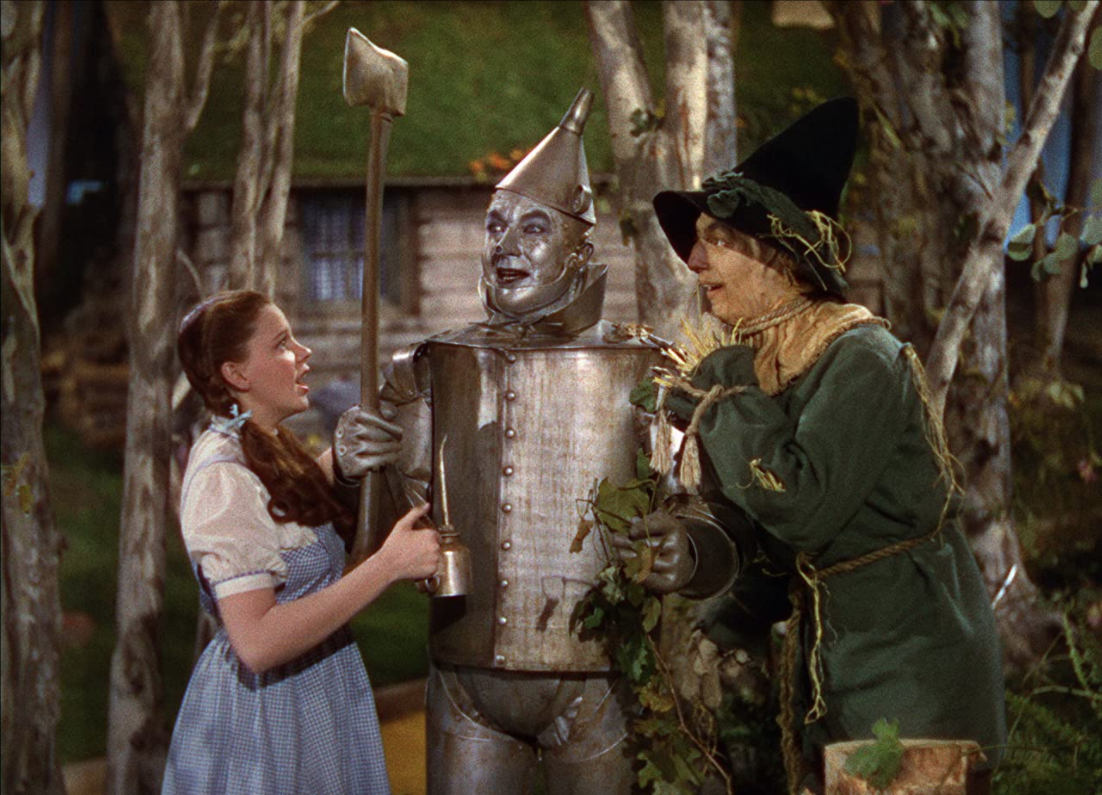
Steelmanning means choosing the strongest version of an opponent’s view, not an easy scarecrow to knock down (The Wizard of Oz, 1939).
RULE #22: Steel man your opponent’s argument and responses
When you straw man an argument, you present a weak, distorted, or oversimplified version of another person’s view and attack that version instead of the strongest or most plausible one. This makes the opposing view easier to defeat, just as straw men are easy to knock down.
By contrast, a steel man is the strongest, fairest, and most plausible version of another person’s view. In philosophy, you generally want to steel man, not straw man, your opponent’s argument, as well as their responses. That is part of both charity and intellectual seriousness. Very few people actually hold straw man versions of their own views, so there is little philosophical value in arguing against a version that almost no one would endorse.
This also means that when a passage can be read in more than one way, and one reading makes the philosopher look obviously foolish while another makes the view more plausible, you should usually prefer the stronger, more reasonable interpretation.

Do not ignore your opponent’s strongest reply: ask the mirror for the fairest version, not the easiest one to dismiss (Snow White and the Seven Dwarfs, 1937).
RULE #23: Do not ignore your opponent’s strongest reply
Even if you steel man your opponent’s position, do not ignore their strongest reply to your objection. If your objection has an obvious response, you should address it. A charitable paper does not pretend that the other side has nothing to say in response.
This is not only charitable, but it is also important, because philosophers are often concerned with acquiring true beliefs. Also, being honest about your opponent’s strongest reply will either push you to develop a stronger response of your own, thereby making your view more plausible, or help you realize that perhaps no stronger response is available. There is no shame in discovering that an opposing view is stronger than you expected, so long as you have the intellectual humility to recognize it.
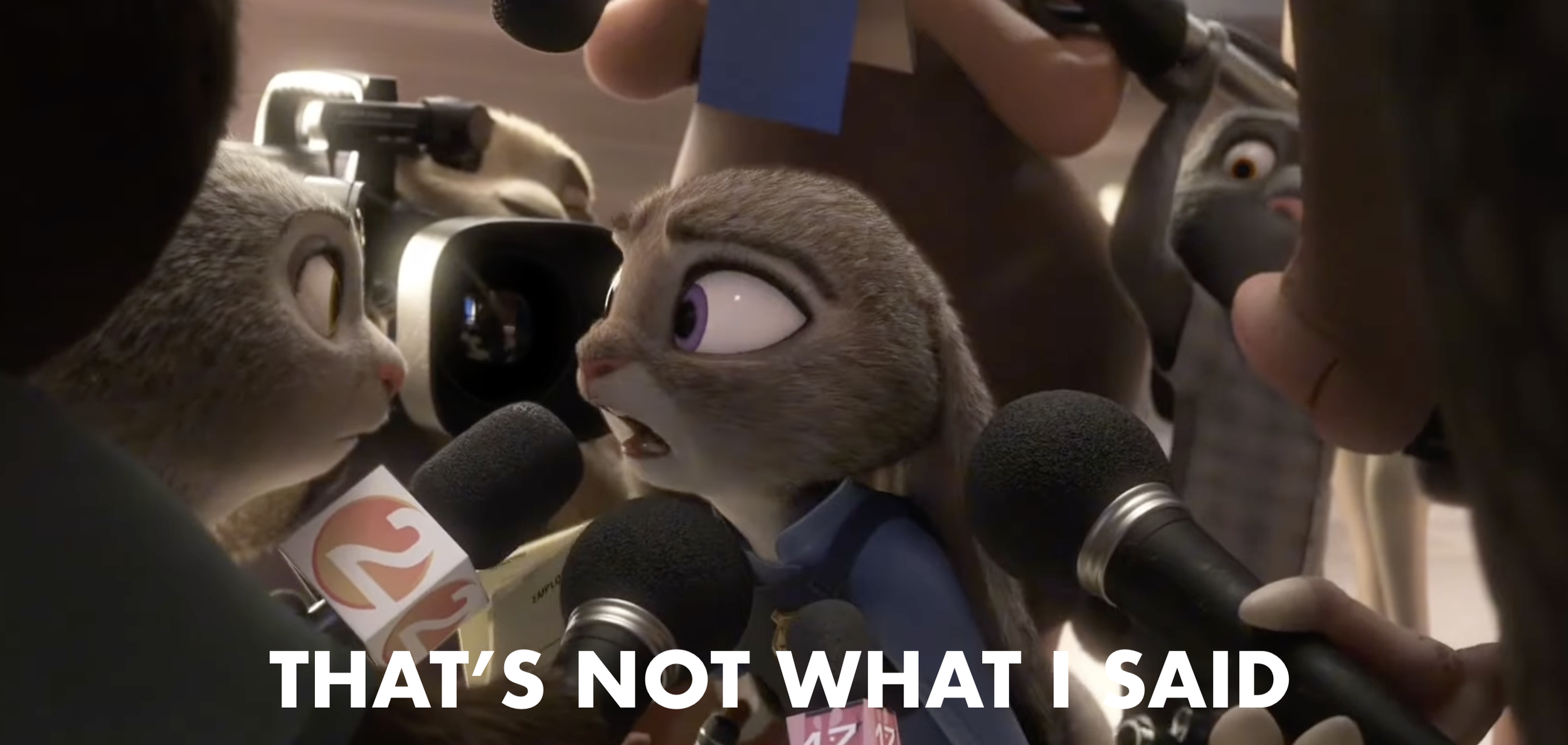
Using quotations and paraphrases fairly means avoiding the “that’s not what I said” problem: represent the view accurately (Zootopia, 2016).
RULE #24: Use quotations and paraphrases fairly
Quoting or paraphrasing a philosopher accurately can help you steel man their position. However, this can sometimes be difficult. This is because it is very important not to quote or paraphrase selectively in a way that makes the philosopher sound weaker, more extreme, or more confused than they actually are. To see what I mean, consider the following passage from Plato’s Republic:
[T]he part of the soul that is forcibly controlled in our private misfortunes and that hungers for the satisfaction of weeping and wailing … is the very part that receives satisfaction and enjoyment from poets … the part of ourselves that is best by nature, since it hasn’t been … educated …, relaxes its guard over the lamenting part when it is watching the sufferings of somebody else.
Weak use of quotation: Plato says that we enjoy “weeping and wailing,” so his view is that poetry is bad because it makes people cry.
Better use of quotation: Plato claims that the part of the soul that we “forcibly control” in our own misfortunes is the same part that “receives satisfaction and enjoyment from poets.” His point is that poetry strengthens this lamenting part of the soul, which affects how much control we have when responding to suffering in our own lives.
The first use of quotation is weak because it makes Plato sound as though he is merely complaining that poetry makes people emotional. The second use is stronger because it preserves the structure of Plato’s reasoning.

Avoiding loaded language means not shouting at the view: explain what is wrong in clear, measured terms (Whiplash, 2014).
RULE #25: Avoid loaded or dismissive language
As I noted under Writing Quality, philosophical writing should be controlled and precise rather than emotional or rhetorical. This is not only part of what makes for serious academic writing, but also a matter of charity. Taking an opposing view seriously requires using language that represents it fairly.
So, if you are trying to steel man your opponent’s view, do not say things like “obviously ridiculous,” “clearly absurd,” or “no one could believe this.” If you disagree, explain exactly what is wrong with the view in clear and measured terms.
5. Checklist
Use the checklist below to review your paper before submitting it.
Writing Quality
Argument Reconstruction
Critical Engagement
Charity
6. Closing Words
The rules I have given you are not meant to constrain good philosophical writing, but to help you begin it. A strong philosophy paper (1) is clearly and carefully written, (2) reconstructs arguments accurately, (3) makes a modest but original contribution, and (4) treats opposing views fairly. Once you understand these rules well, you will be in a better position to use them thoughtfully and break them when needed. Until then, follow this guide, and you will be well on your way to writing strong philosophy papers.
I am indebted to the many friends, colleagues, and professors who helped me learn how to write philosophy and who continue to help me find better ways to teach others to write it. I am especially indebted to Lara Buchak. My conversations with her, as well as the experience of teaching for her, have shaped this guide and helped me become a better teacher.
Anyone who would benefit from this guide is welcome to use it.
© 2026 Jazlyn Cartaya. This work is licensed under CC BY-NC 4.0.